If I Can't Have Love, I Want Power by Halsey // 5 Year Anniversary Album Review

If I Can't Have Love, I Want Power is a largely dark and brooding exploration of femininity, identity, body autonomy, and gender exploration beyond the framework of traditional stereotypes and conventions. There are many aspects of Halsey's life that informed this conceptual project, but perhaps the most pertinent influence is their own path to motherhood. She has been very open about her health and fertility journey throughout her career, especially in bringing awareness to her endometriosis diagnosis and the miscarriages she has experienced. This album became a bold and honest confrontation of all that society and the world at large place on women, as well as the limitations of her own body as someone living with chronic illness. In January 2021, Halsey announced she was pregnant with her first child, and she gave birth just a month before the album was released.
So much of this album is rooted in reclaiming autonomy over her body in the wake of illness, pregnancy, and the barriers around their gender fluidity breaking down - alongside the societal expectations she's actively pushing back against. This music is bold, divisive, contradictory and deeply personal all at once. Ultimately, it is about finding the balance between love and power, while also serving as a confrontation to the systems built to confine and oppress women, and a refusal to accept the limitations placed on her; both internally and in a larger societal sense. She also created a conceptual short film to coincide with the project, bringing so many of these themes and ideas to life in a visual sense.
Many of these songs are written from the perspective of grappling with lust and temptation - in relationships, in desire, and in life itself. They're driven by an insatiable ambition that continually treads the line between what it means to have love and power, and the way those forces interact and counteract each other throughout her life. At the center of its narrative is the tension between the inevitable succumbing to not having control, while still want everything to bend at her will.
These notions are captured through Halsey's thought-provoking lyricism and world building within this project, each song deriving from so many strong, distinct viewpoints; one is about a siren luring a sailor to his doomed fate, another as the biblical she-demon who tempted Adam from the Garden of Eden, and another as the traditional damsel in distress. Finally, these songs are rooted in her own experiences, which are threaded throughout the entirety of If I Can't Have Love, I Want Power. Religious themes run through the project with so much precision and intention as well, adding depth to the stories she's telling and expand the narrative influences she channels beyond her own life.
This marked the most significant genre shift of Halsey's career up to that point and feels like the most fully realized version of who they are as an artist. Produced in collaboration frequent collaborator John Cunningham, along with Trent Reznor and Atticus Ross of Nine Inch Nails, the album finally delivers the full‑scale rock project that had long felt overdue for her. She's always woven elements of this sound into her work, with songs like "Nightmare", "Gasoline" and "Experiment On Me" coming through as clear precursors to the fully evolved concept that If I Can't Have Love, I Want Power is built on. For her to fully commit and go all the way with making an industrial rock record like this with two of the pioneering producers of the genre was incredibly executed and a largely unexpected creative collaboration for all involved at the time.
Halsey wrote them a letter asking them to be involved in the project, and if they had declined the offer, she said If I Can't Have Love, I Want Power likely would not have even been made at all. In an interview with NME, she opened up about that moment and what working with them meant for the project. "First of all, I thought I was writing a letter to Santa being like, 'I've been a very good girl'," she said of the letter she wrote to Trent and Atticus. "I was just really honest and said I was a huge fan and I've been plagiarizing you guys for years - badly - and I'm not arrogant enough to believe that I have anything new to offer you, but this album is about pregnancy, gender identity, body horror. The most important thing to me is that this album has tension - it needs to be visceral, or I'm doing a disservice to the message."
This record was unexpectedly released a year after Halsey's most commercially successful release with Manic the year prior, and easily could have continued down the same radio-friendly and relatively pop-centered path with their subsequent work. Instead, she chose to take a riskier, heavier approach to her follow-up and ended up creating the greatest work of her career.
Her journey to motherhood and her experiences as a mom will forever inform the work she makes going forward, which is especially true of this album's follow-up, The Great Impersonator, where many of the themes of identity and mortality that were introduced here were further explored in candid depth. In a way, If I Can't Have Love, I Want Power stands as an underrated gem within Halsey's catalog as a full exploration of what they had been building toward all along for the decade prior. The way the unbridled rage and chaos of this record as a whole is counteracted with several deeply sincere, heartfelt songs makes this album such a dimensional work of art - one that goes beyond the impulses that largely shape the work of other traditionally mainstream pop artists.

"The Tradition" opens the album, an intimate piano ballad that slowly builds into a chilling, full‑bodied chorus. It's filled with dark lyrical undertones and introduces the story of If I Can't Have Love, I Want Power in such a strikingly atmospheric way. "So take what you want, take what you can, take what you please, don't give a damn," Halsey sings in the chorus. "Ask for forgiveness, never permission". The song is undoubtedly rooted in the autobiographical threads of Halsey's own life and lessons they have learned, but it also lays the foundation for the album's larger narrative of attempting to reckon with what it means to hold love and power at once and to find the medium between surrender and control. "She smiles back, but it's a fact that her fear will eat her alive, well, she got the life that she wanted, but now all she does is cry," introduces a very specific lyrical theme that recurs throughout the rest of the album in a prominent way.
"I start the album ironically with a song called 'The Tradition' before I know I’m pregnant and ... then by the end of the record, I have a much better idea of what family and what tradition really are," she said in an interview with Zane Lowe for Apple Music. "I still have so much, so much to know and so much to learn and so much to experience."
The seamless transition right into "Bells In Santa Fe" further builds out the sonic work that all of If I Can't Have Love, I Want Power is anchored in. The thesis of this entire record is introduced in the first lines; "All of this is temporary". That lyric is truly the defining statement of the album, because every single emotion and experience explored on this album - from the pain, the love, the fear, the sickness, the desire - all of it is fleeting. All of it is temporary. The way these feelings are detailed throughout the record as constantly shifting and reshaping sits at the heart of every song. Nothing is certain and nothing is ever fully in your control.
"Easier Than Lying" closes out the most incredible three track run of possibly any album ever, especially within Halsey's own discography. The slow, haunting build up of the first two moving right into the unchained rage of unreciprocated love of "Easier Than Lying" is insane. It fully delivers on the gothic horror elements of the album, while also setting up the overall theme of the project in such a powerful way. It's loud and brash and an extremely singular moment of this record.
"I'm only whatever you make me, and you make me more and more a villain every day, but you don't know, you reap, you sow whatever you give to me, from yourself, you take," she sings in the opening verse. "Well, if you're a hater, then hate the creator, it's in your image I'm made".
In an interview at Capitol Studios with Trent Reznor and Atticus Ross, Halsey said, "When I got back to 'Easier than Lying' for the first time, I noticed there was this rage. I was talking about two things: one is your parents and the others were lovers and the people in life who made you into someone and then decided they don't like the person they made you into, as if you had any control over that."
"My heart is massive, but it's empty, a permanent part of me, that innocent artery is gaspin' for some real attention, some undivided hypertension" is such an evocative and visually striking lyric that really stands out. Similarly, the lyric "I lost all my faith and lost all hope that everything means anything at all" is another defining lyric of this entire album that distills the sharpness and devastation they are looking to convey with this record.
It largely feels like the perfect representation of Halsey's long‑overdue, full‑on rockstar moment, and the production behind it is absolutely incredible. The final minute after she repeatedly sings "Losing you is easier than lying to myself that you love me" especially encapsulates that wild, spiraling energy with sirens blaring, guitars shredding, and everything exploding at once.

Much of this album is rooted in the classic 90's grunge influences that channel the raw, unpolished energy that defined that era of music. "Lilith" was the first song written for the album, and it leans into the promiscuity and temptation of the biblical she‑demon it's named after, a prominent figure in Jewish folklore. There are many varying interpretations of who she is and what she symbolizes, but she's largely cited as Adam's first wife, banished from the Garden of Eden for "disobeying" him. That mythology threads directly into the religious themes woven throughout the album, both lyrically and visually, which adds another layer to the album's exploration of rebellion and desire, tied with feminine power.
"You got me thinkin' that I was too mean, well, everything that I say, I believe," Halsey sings in the opening verse. "I am disruptive, I've been corrupted and by now, I don't need a fuckin' introduction". It is a song rooted in the self-destructive sides of herself, with a warning of this being a fiery, fast romance that could be over before it even begins. The momentum is carried right into "Girl Is A Gun", and again, the transitions between these songs and the sequencing of this tracklist is so masterfully produced and curated.
"I feel lighter in the waistline with no hands around me, no spit in my teeth, no, I'm not your daydream, I won't have your baby, stop 'cause you're killin' my vibe," she sings in the opening verse. "It's a shot in the dark, I'm not a walk in the park, I come loaded with the safety switched off".
They fully go all in on the self‑destructive nature of who she is, and the playful liberation of it, especially in the second verse and the delivery of lines like "I keep fallin' in love, but this measurin' cup, is overflowin' with the same damn problems" or "You'll be better with a nice girl, darling". The glitchy electronic production gives the song a distinct jagged, new‑metal edge that feels reminiscent of "Experiment on Me", especially in the way she taps into the same feral, chaotic energy that defined that deep-cut track too. "honey" similarly is such a fun and liberated piece of this album, hitting with a fast‑paced rush that fully counteracts the heaviness of the song that comes right before it in the tracklist sequencing. It especially carries the same impulsive, fast‑paced energy linked to the spirit of "Girl Is A Gun".
"You asked for this" is such a gem on this album that just feels so Halsey in the best, most autobiographical and unfiltered way possible. In this song, she is unapologetic about what she wants and who she is, and is also brutally honest in the way she analyzes her own faults and flaws. On "You asked for this", she reckons with all of the choices she has made - or has chosen not to make - in her life, in a way that feels very linked to her own personal lived experiences. It also connects to so many universal feelings that women experience throughout their lives, especially in terms of the continuous path of learning, making mistakes, and figuring yourself out in a world that is constantly moving. It's ultimately about learning what it means to be a woman and what it means to choose yourself.
"Now what the fuck does all this mean? You know I'm still somebody's daughter, see," she sings in the first verse. "I spilled the milk you left for me, my tears are fallin' flawlessly now". This song is also rooted in the need to just go for it and to fully claim the life you're chasing - because if you don't, you'll get drowned out, overlooked, or left behind. "Go on and be a big girl, you asked for this now, go on and be a big girl, or everybody's gonna drown you out," she sings in the chorus. "Go on and be a big girl, you asked for this now, you better show 'em why you talk so loud".
It's such a deeply inspiring and motivating message, especially for any woman coming of age in a society that is always trying to minimize you or redirect you toward a life that is more traditional or "acceptable". This song actively pushes back against all of that, especially the pressures to settle for mundanity instead of pursuing an artistic, unconventional life. "Well, is this the life that lies ahead now?" she poignantly asks at the end of the second verse.
"I want my cake on a silver platter, I want a fistful in my hands, I want a beautiful boy's despondent laughter, I wanna ruin all my plans" she sings in the incredible bridge. "I want a fist around my throat, I wanna cry so hard, I choke, I want everything I asked for". The last line especially is one of the defining lyrics of Halsey's entire discography - to make such a clear declaration of everything you want is such a powerful act that encapsulates all that Halsey represents with their music in the most bold and visceral way.

In 2021, Halsey wrote on Twitter that "You asked for this" is rooted in "...a conversation between the me who is becoming a mom saying 'grow up' and the part that so desperately wants to remain a child. Wondering if we can co-exist, despite the massive change."
Built in throughout all of the different layers of love and power is the heart of this entire project, which is Halsey's journey to motherhood and the beautiful love songs dedicated to her son and partner at the time. "Darling" is the first moment of this on the album, which is such a sweet, acoustic folk song that contradicts so much of what came before it, and follows up "You asked for this" with the idea of being able to live with all of the sides of herself that she wants all at once.
It also feels like a precursor to a lot of the themes of life, death, and legacy that she later explored on The Great Impersonator, with the title track and "Only Girl in LA" especially echo this. To take the perspective of imagining her life after death, trying to reckon with where her home truly is, and where she will one day be buried after spending so much of her life on the run and never being fully settled anywhere, is beautifully depicted.
There is a clear Fleetwood Mac influence, which is made even more clear by Lindsey Buckingham himself playing guitar on "Darling". This is such a sweet and loving moment that counteracts the intensity and endless longing for answers and what it means to love, and then to finally know when you have it and the power that feeling holds when you do. It is written as the sweetest love song and lullaby to her son, and is such a gentle encapsulation of having such a profound sense of love and safety in life for the first time.
"Darlin', don't you weep, there's a place for me, somewhere we can sleep, I'll see you in your dreams, darlin', don't you cry," Halsey sings throughout and in the final lines of the song. "Head fast toward the light, foolish men have tried, but only you have shown me how to love bein' alive".
"1121" follows, which is inspired by the day she found out she was pregnant, November 21, and is largely rooted in the fears of what is to come next and all of the unknown elements that can happen to her body and her baby through the coming months and the ways she will be forever changed, mentally and physically, by this experience. Her health journey has been a recurring underlying theme throughout so much of her work thus far, and much of that was at the center of not just If I Can't Have Love, I Want Power, but also The Great Impersonator as well, which in its entirety was making sense of her own mortality and illness in the rawest way possible. It was made with the intention of it being her final album and likely not being here to see its release. To understand the weight that this album and its follow‑up were under ties them together intrinsically in such a deeply emotional way. "1121" best captures that notion within this album, especially the embodiment of all of the fears and uncertainties of what she would be leaving behind.
"Well, I won't die for love, but I've got a body here to bury and if truth be told, it's scary, 'cause my shoulders are heavy already, and, yeah, I know the parts of myself that I've hated and I can't tell which ones are mine and which I created," she sings in the opening verse.
This song carries the same haunting tone that so many of the songs in the first half of the record do, fully capturing the weight and heaviness that come with these thoughts, especially the fear and uncertainty of it all. "But I won't die for love, but ever since I met you, you could have my heart and I would break it for you," is the most pertinent sentiment of not just this song, but the core of any mother's experiences and within the entirety of If I Can't Have Love, I Want Power.
A mother, in countless ways, sacrifices her body for her baby, and that is what so much of this album is ultimately about. Halsey has always been very open about her fertility journey through her music, "More" from her previous album Manic in particular is one of the most devastating songs ever written for so many reasons. In her interview with Zane Lowe, she said that "Pregnancy for some people is a fucking nightmare. It's a nightmare. And that's the thing that nobody else talks about, right?" She continued, "It's the pain, the blood, the disease, the fear, the fact that it's arguably the most dangerous condition a human body can experience and has been for millennia that, like, it kills people, and to this day, it still kills people."

"Whispers" brings back the desire to continually feed into the lust and temptations from this inner voice, like it's the devil sitting on her shoulder. It grapples with her mental health and the monologue within herself that she is actively fighting back against in life. "Why do you need love so badly? Bet it's because of her daddy, bet she was brutal and bratty, bet that she'll never be happy, I bet that you're right and I'll show you in time," she sings in the second verse. "But I sabotage the things I love the most, camouflage so I can feed the lie that I'm composed". It just keeps going around and around with all of the dark thoughts in her mind, trying to make sense of why she is the way she is and often self-sabotages in relationships.
"I am not a woman, I'm a god" then follows, and in terms of the direction of this album, it is probably the most traditionally pop‑sounding song, even though it is still quite weird and out‑there production‑wise with the arrangement. Halsey once again is grappling with the two sides of themself in every regard: "I am not a martyr, I'm a problem", "I am not a legend, I'm a fraud", and the title line, "I am not a woman, I'm a god". It is such a cool song that feels very reflective of the divide between love and power within this album and the contradictions within herself that she battles on the daily.
"The Lighthouse" is such a different song on the album that fully leans into the narrative‑fiction form of songwriting, written from the perspective of a siren luring and tempting a sailor to his ill‑fated destiny. It is so visual in the way it is written and so deeply cinematic in the world built within the album. "From a tender age, I was cursed with rage, came swingin' like a fist inside a battin' cage," Halsey sings in the opening lines. "I went swimmin' with the Devil at the bottom of a lake and he left me there by my lonesome".
Once again, she depicts herself as this sort of villainous, evil, feminine figure - one that is ultimately largely misunderstood in terms of the origins from which they derive - in a lot of these narratives, which is such an interesting viewpoint to be capturing in so many different ways. "The Lighthouse" brings forth some of the darker, more experimental electronic and rock production that is present on this album and the ways in which it amplifies the character she's embodying.
"There is a lighthouse, in thе middle of the deep and I'm still stranded on thе shoreline there and nobody hears me scream," she sings in the chorus. "And I'll lure you like a landslide and I'll show you lovely things, if you rescue me, but they're make-believe, the lighthouse by the sea". The dangerous mirage of all that a siren represents in Greek mythology - with the way they would lure nearby sailors with their beautiful voices and hypnotize them - is woven throughout the song.
"I met a sailor on a ship with promise in his eyes, he kissed me on the mouth and dug his fingers in my thighs, but a sailor ain't a savior 'cause they only tell you lies," she sings in the second verse. "He's layin' in the water, begging God to let him drown, so I showed him all my teeth and then I laughed out loud, 'cause I never wanted savin', I just wanted to be found".

The full heart of what this album is and the nature of all that it's built on is brought to a close on the final song, "Ya'aburnee". It is such a beautiful ending to this album, it is so deeply special and emotional to listen to after following the journey of not just this record, but of all the work that went into getting to this point in her life.
"I get undertones of sadness, when I think about the moments, that I never got to spend with you," she sings in the gorgeous opening lines. "I can't decide if I love you more in morning, or I love you more at night". The title derives from an Arabic word that roughly translates to "may you bury me". In the case of this song, it is written as a love letter to her son and partner at the time, hoping she she will die before them so she doesn't have to ever live in a world without them.
It is written in such a stunning, poetic form that is so deeply evocative and emotional, and again is rooted in these really strong feelings that come with an eternity of love, especially one that forms between a mother and a child. The production is so sparse and ends in the opposite way the album began with "The Tradition" - the a tense, rising song about not knowing what love is, wondering if she will ever find it, and if she will ever truly love someone and be loved back. To then come full circle to this beautiful moment of surrender, allowing herself to love another forever and knowing that it is all out there for her to experience, is such a powerful way to close this project.
"I think we could live forever in each other's faces 'cause I'll always see my youth in you, and if we don't live forever, maybe one day, we'll trade places," she sings in the chorus. "Darling, you will bury me, before I bury you".
Thanks for reading! I have written about Halsey’s music many times through the years - all of which are linked here and below. I had the chance to hear many of these songs live for the first time, many of which she doesn't often perform and likely won’t again, at a very special orchestral show in New Jersey back in 2023 in a completely different arrangement, and even more on their Back to Badlands Tour in 2025. This is such an incredibly inspiring album and one that truly nothing else compares to. Halsey is one of my favorite artists to write in depth about in this way, so more coming soon, always!
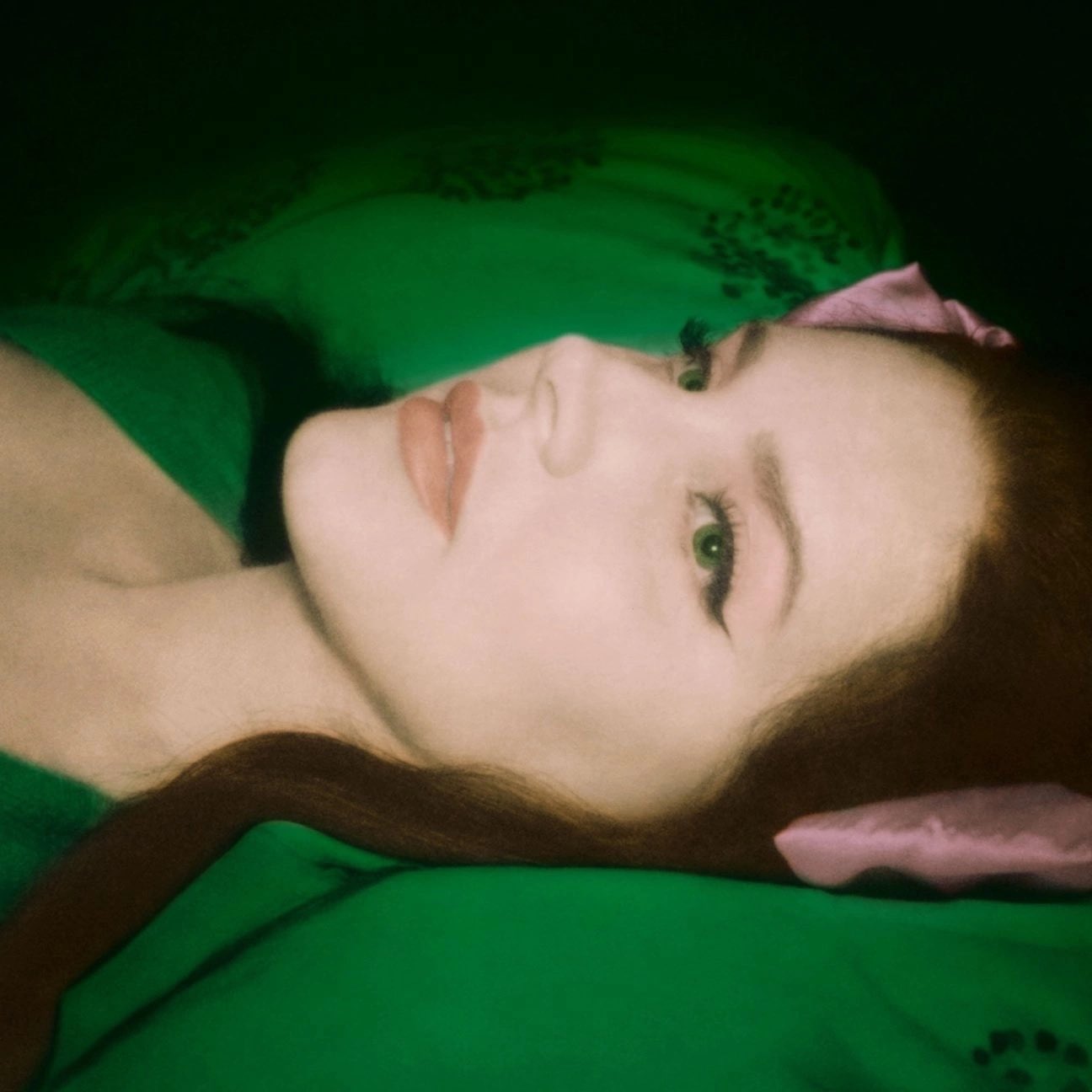
Photo Credit: Lucas Garrido, Halsey, Capital Records
Related Posts:
BADLANDS by Halsey // 10 Year Anniversary Album Review
Room 93 by Halsey // 10 Year Anniversary EP Review
Halsey with Live String Ensemble in Newark, New Jersey
"929" by Halsey // Song Review
The Great Impersonator by Halsey // Album Review
Back to Badlands Tour // Halsey Live in Philadelphia, PA! October 2025
About Face By Halsey // Best Selling Products Review
About Face By Halsey // Matte Fluid Eye Paint Review // All Eyes on Hue Duo
Manic by Halsey // 5 Year Anniversary Album Review




Comments
Post a Comment